Bhaktapur is not only a city of ancient temples, carved windows, and brick streets. It is also a city of flavors. The food here is warm, traditional, simple, and deeply connected to Newari culture. When you walk through Bhaktapur, you smell fresh spices, hear the sound of frying bara, and see elders enjoying tea in open courtyards. Every corner has its own taste, and every dish has a story.
This Bhaktapur food guide is written in an easy and friendly way so you can enjoy the best dishes without getting confused. Whether it’s the creamy juju dhau, freshly steamed yomari, or a full Newari feast, this guide will help you discover the heart of Bhaktapur through its food. If you want a simple overview of the city before exploring this topic, you can also read our Bhaktapur Travel Guide, which explains the culture, squares, food, and daily life of the old city.
Understanding Newari Food in Bhaktapur – Simple, Flavorful, and Cultural
Newari cuisine is one of Nepal’s oldest and richest food traditions. The dishes are made from fresh ingredients, simple spices, and recipes passed down for generations. In Bhaktapur, you taste food that is authentic and full of character.
Why Newari food feels special
• Fresh, homemade style
• Balanced flavors
• Traditional cooking methods
• Served in clay plates or leaf bowls
• Connected to festivals and daily life
When you eat in Bhaktapur, you aren’t just eating a meal. You are tasting culture, history, and warmth in every bite. Since Bhaktapur’s festivals and traditions are closely linked to Newari heritage, you might enjoy reading our guide on Newari Culture in Bhaktapur, where we explain daily life, customs, and community traditions.
Juju Dhau – The Heart of the Bhaktapur Food Guide
If there is one dish that defines Bhaktapur, it is Juju Dhau, also known as the “King of Curd.” You will see it displayed in clay pots in almost every shop inside the old city.
Why Juju Dhau is famous
• Extra thick and creamy
• Naturally sweet
• Served in clay pots
• Made using traditional methods
The clay pots help remove extra moisture, making the curd thick and rich. The first spoonful melts smoothly on your tongue and leaves a sweet, gentle taste.
Where to find the best Juju Dhau
• Shops inside Bhaktapur Durbar Square
• Siddha Pokhari area
• Pottery Square shops
• Local dairies near Taumadhi Square
The small, local dairies often serve the freshest curd straight from the pot.
Yomari – A Must-Try Food in Bhaktapur
Yomari is a soft, steamed dumpling made from rice flour and filled with chaku (a sticky brown sugar mixture). It has a unique shape, like a fish or triangle, and is eaten warm.
Why people love Yomari
• Soft and sweet
• Traditional Newari comfort food
• Special during festivals
• Made fresh in local homes and small eateries
Yomari tastes best when eaten straight after steaming because the inside stays warm and sweet.
Where to eat Yomari in Bhaktapur
• Local eateries near Dattatreya Square
• Traditional restaurants in Taumadhi Square
• Small home-run kitchen stalls
Some families even sell homemade yomari from their windows, these often taste the best.
Samay Baji – The Traditional Newari Platter
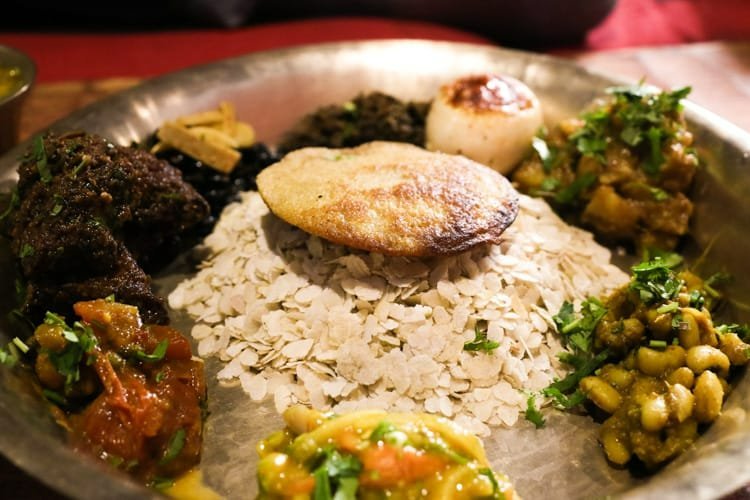
This is a complete Newari meal served during festivals, family gatherings, and special days. It includes beaten rice, spiced potatoes, black-eyed beans, dry fish, eggs, bara, and achaar.
Why Samay Baji is important
• It represents Newari hospitality
• A mix of flavors on one plate
• Mostly homemade
• Simple but nourishing
It is not heavy, but it fills you with warm comfort.
Where to find Samay Baji
• Newari restaurants in Durbar Square
• Family-run eateries in Dattatreya Square
• Guesthouses serving traditional lunch
Ask if they serve the traditional version, as some restaurants prepare a modern twist.
Bara and Chatamari – Newari Savory Favorites
Bara is a soft lentil pancake sometimes topped with egg or minced meat. Chatamari is a thin rice flour crepe topped with vegetables, egg, or meat.
These snacks are popular street foods in Bhaktapur.
Why they’re popular
• Simple and filling
• Freshly prepared
• Affordable
• Perfect for breakfast or evening snacks
You can see them being cooked on open stoves right in front of you.
Where to find Bara and Chatamari
• Around Pottery Square
• Near Taumadhi Square
• Local tea houses inside the old alleys
Look for small shops with locals gathered outside, that’s usually a sign of good food.
Sel Roti and Aloo Tarkari – A Simple Bhaktapur Breakfast
Sel roti is a soft, ring-shaped rice bread that is slightly sweet. It tastes perfect with aloo tarkari (potato curry). Many households cook this during festivals and mornings.
Why you should try it
• Light and tasty
• Feels like homemade food
• Perfect way to start your morning
Where to find it
• Morning street stalls
• Tea shops in Bhaktapur Durbar Square
• Local breakfast corners around Siddha Pokhari
Early morning is the best time to get them fresh and warm.
Bhaktapur Street Food – Simple, Fresh, and Full of Life
Bhaktapur’s street food scene is gentle compared to big cities, but it carries its own charm.
Popular Bhaktapur street food items
• Aloo chop
• Fried peanuts and beans
• Spicy corn
• Puffed rice mixes
• Fresh fruits
• Warm tea
These are found on small carts along the brick alleys.
Best places for Bhaktapur street food
• Taumadhi Square
• Bhaktapur Durbar Square
• Small lanes near Pottery Square
• Around temples and morning markets
Walk slowly, look around, and follow the comforting smell of spices.
Where to Eat in Bhaktapur – Best Areas for Good Food
You don’t need fancy restaurants to enjoy Bhaktapur’s food. Most of the best dishes come from small, family-run places.
Top food areas in Bhaktapur
• Taumadhi Square: Great for yomari, bara, and coffee
• Dattatreya Square: Traditional meals and peaceful ambiance
• Pottery Square: Small street food stalls and local breakfasts
• Durbar Square area: Best for Juju Dhau and local desserts
Each area has its own character. Taumadhi is lively, Dattatreya is quiet, Pottery Square is artistic, and Durbar Square is historic.
Practical Tips for Eating in Bhaktapur (Easy First-Time Advice)
Eating in Bhaktapur is safe and enjoyable, but these tips make your experience even better:
• Choose places where locals are eating
• Try early morning snacks for the freshest taste
• Carry small cash, as many stalls don’t take cards
• Ask vendors if the food is spicy
• Try clay pot dishes, they taste richer
• Do not rush; food in Bhaktapur is best enjoyed slowly
Locals are friendly and helpful, so don’t hesitate to ask for recommendations.
Final Thoughts
Bhaktapur’s food is simple, warm, and full of history. From the king-like sweetness of Juju Dhau to the comfort of yomari and the celebration of Samay Baji, every dish carries a story. Eating here feels personal. You taste tradition, love, and heritage in every bite.
Walk through the brick lanes, stop at a tea corner, sit on a temple step, and enjoy whatever comes your way. The best meals in Bhaktapur often appear when you aren’t even looking for them.
Food here isn’t just food. It is a memory. If you want to explore Bhaktapur in local way, book your experience at Nepal Homestays.
FAQs
1. What food is Bhaktapur most famous for?
Juju Dhau is the most iconic food, known for its creamy taste and traditional clay-pot preparation.
2. Is food in Bhaktapur spicy?
Some dishes are mildly spicy, but vendors can adjust the flavor if you ask.
3. Where can I find authentic Newari food in Bhaktapur?
Taumadhi Square, Dattatreya Square, and small family-run eateries serve the most authentic meals.
4. Is street food in Bhaktapur safe for travelers?
Yes, as long as you choose busy stalls with fresh preparation.
5. What time is best for trying local snacks?
Mornings are great for sel roti and breakfast dishes, while evenings are perfect for bara, chatamari, and tea.
Company Admin
Travel writer sharing authentic stories and experiences from Nepal's beautiful homestays.